Federal Reserve & Banking
The Federal Reserve Holds Rates Steady as Iran Conflict Roils Global Oil Markets
With the federal funds rate anchored at 3.5–3.75% and crude oil prices surging past $110 per barrel, the central bank faces its most consequential policy crossroads since 2008.
Veritas Worldwide · March 24, 2026 · 12 min read · 5 sources cited
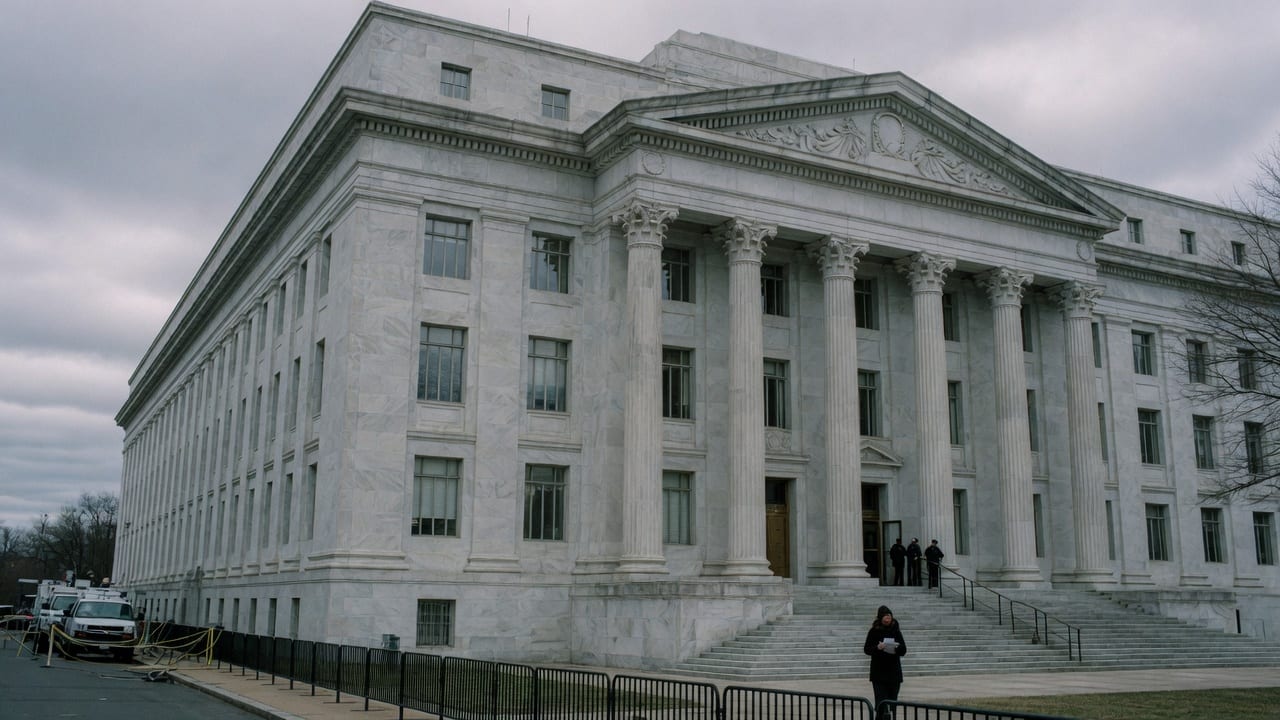
On March 18, 2026, the Federal Open Market Committee voted 11-1 to hold the federal funds rate in a target range of 3.50% to 3.75%, extending the pause that began in late 2025. The decision came as the U.S. economy faces a convergence of pressures that echo every major crisis documented in The Record: a central bank navigating between inflation and recession while geopolitical conflict reshapes global commodity markets.
The Vote: 11-1, With a Notable Dissent
Governor Stephen Miran cast the lone dissenting vote, favoring a quarter-point reduction. His dissent marks the longest stretch of consecutive FOMC dissents since 2013 — a signal of genuine policy disagreement within the institution. The Federal Reserve’s own statement acknowledged that ‘inflation remains somewhat elevated’ while ‘job gains have remained low.’
verified
The FOMC statement issued March 18, 2026, states: ‘The Committee decided to maintain the target range for the federal funds rate at 3-1/2 to 3-3/4 percent.’ Source: federalreserve.gov
The Iran Factor: Oil, Inflation, and the Strait of Hormuz
The dominant factor behind the March decision is the ongoing military conflict with Iran, now entering its fourth week. The fighting and its impact on shipping through the Strait of Hormuz — through which roughly 20% of the world’s oil supply transits daily — has driven crude prices past $110 per barrel, threatening to entrench inflation above the Fed’s 2% target.
“Near-term measures of inflation expectations have risen in recent weeks, likely reflecting the substantial rise in oil prices caused by the supply disruptions in the Middle East.”— Fed Chair Jerome Powell, March 18, 2026
RELATED: Chapter 10 — The Petrodollar System traces how a 1974 agreement between Kissinger and Saudi Arabia made U.S. monetary policy structurally dependent on Middle Eastern oil. Chapter 12 explains how the Federal Reserve operates.
The Dot Plot: One Cut This Year, Maybe
The dot plot pointed to just one rate reduction this year and another in 2027 — a downgrade from three cuts projected as recently as September 2025. The median longer-run neutral rate held at 3.0%.
3.50–3.75%
Federal Funds Rate (March 2026)
$110+/bbl
Crude Oil Price
11-1
FOMC Vote
Historical Pattern: The Fed in Crisis
The Federal Reserve has faced similar crossroads before. In 2008, as documented in Chapter 13 of The Record, the Fed slashed rates to near zero while bailing out the institutions whose reckless behavior caused the crisis. Not a single top banking executive was prosecuted. The $700 billion in taxpayer-funded bailouts went to the same firms that packaged toxic mortgages as AAA securities.
Today’s situation differs in mechanism but not in structure: the Federal Reserve remains the institution tasked with managing consequences of policy decisions made elsewhere — in this case, a military conflict that has disrupted the oil supply chain the U.S. economy was built to depend on.
verified
All interest rate data, FOMC statements, and dot plot projections cited in this article are sourced directly from the Federal Reserve Board’s official publications at federalreserve.gov.
Topics
Related Chapters
Sources
- [1] FOMC Statement — March 18, 2026 View Source
- [2] Fed Interest Rate Decision March 2026 View Source
- [3] Summary of Economic Projections, March 18, 2026 View Source
- [4] H.15 — Selected Interest Rates View Source
- [5] Powell Says Oil Crisis May Have Temporary Effects View Source